Nov
Why Changing Your HVAC Air Filter Matters: 7 Reasons Kentucky Homeowners Shouldn’t Ignore It
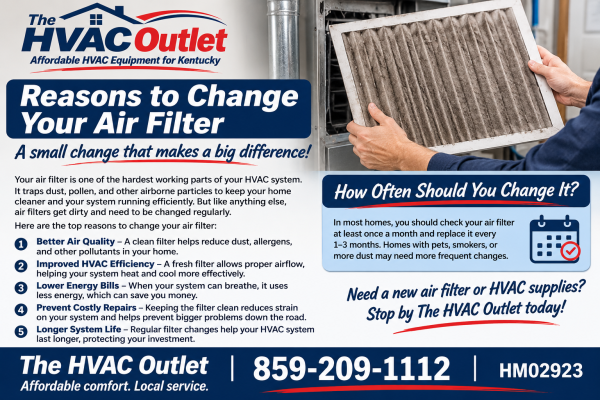
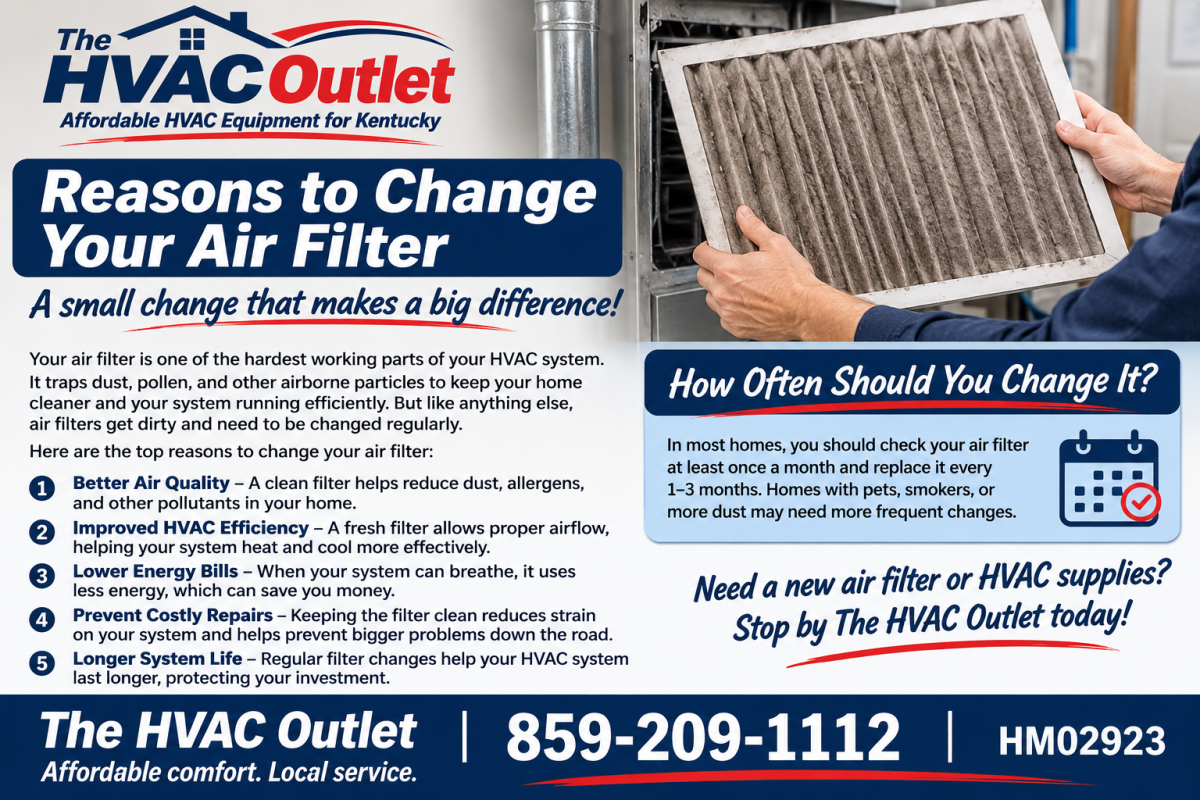
Changing your HVAC air filter is one of the easiest and least expensive ways to take care of your heating and cooling system. Yet, it’s one of the most commonly forgotten maintenance tasks by homeowners.
Whether you’re running your air conditioner during a hot Kentucky summer or your heat pump during the winter, your air filter plays an important role in keeping your system running properly.
At The HVAC Outlet, we talk a lot about saving money on HVAC equipment, but protecting the equipment you already own is just as important. Something as simple as replacing a dirty air filter can help improve airflow, reduce unnecessary strain on your system, and keep your home more comfortable.
1. A dirty air filter restricts airflow
Your HVAC system needs a steady flow of air to operate properly. As dust, dirt, pet hair, and other debris collect on your air filter, airflow can become restricted.
When air cannot move freely through your system, your equipment has to work harder to move air throughout your home. Restricted airflow can contribute to comfort problems and, in some circumstances, equipment issues.
A clean filter allows air to pass through more easily, helping your HVAC system maintain proper airflow.
2. It can help lower your energy bills
When your air filter becomes clogged, your system may have to run longer or work harder to maintain the temperature you set on your thermostat.
Depending on your equipment and how dirty the filter is, restricted airflow may contribute to higher energy consumption.
Changing your filter regularly is a simple maintenance step that may help your heating and cooling system operate more efficiently and avoid unnecessary energy use.
3. It helps protect expensive HVAC equipment
Your air filter helps catch dust and airborne debris before they make their way farther into your HVAC system.
When filters are neglected, buildup can contribute to dirt accumulating on components such as the blower and evaporator coil. Dirty components can interfere with system performance and may eventually lead to expensive maintenance or repairs.
A replacement filter costs a fraction of what major HVAC repairs can cost. Staying on top of filter changes is one of the easiest ways to protect your investment.
4. Your home may feel more comfortable
Have you noticed certain rooms getting warmer or cooler than others? Is your system running but not moving much air through your vents?
A dirty filter may be contributing to the problem.
Restricted airflow can make it harder for your HVAC system to distribute conditioned air throughout the house. Replacing the filter may help restore airflow and improve comfort, although other issues can also cause uneven temperatures.
If your system still struggles after replacing the filter, it may be time to have it checked.
5. It can help keep your indoor air cleaner
Everyday activities such as cooking, cleaning, pets, and simply moving around your house create airborne particles that can circulate through your HVAC system.
Your air filter captures some of these particles as air passes through it. A clogged filter, however, is no longer in the condition it was designed to operate in.
Regularly replacing your filter helps maintain its intended filtration performance. If allergies or indoor air quality are a concern, selecting the right filter is important. Higher filtration isn’t always better if the filter restricts airflow beyond what your system can handle.
6. It can help prevent your system from overheating or freezing up
Airflow is critical to how your HVAC system operates.
During heating, restricted airflow can contribute to excessive temperatures in some systems and may cause safety controls to shut equipment down.
During cooling, insufficient airflow across the indoor coil can contribute to the coil getting too cold and freezing.
A dirty filter isn’t the only cause of these problems, but it is one of the first things homeowners should check when their HVAC system isn’t operating correctly.
7. It’s one of the cheapest forms of HVAC maintenance
You don’t always need an expensive service call to take care of basic HVAC maintenance. Replacing your air filter is something most homeowners can do themselves in just a few minutes.
Compare the cost of a filter to the cost of a compressor, blower motor, evaporator coil, or an emergency HVAC repair. Staying consistent with filter changes is an easy habit that could save you headaches down the road.
How often should you change your HVAC air filter?
There isn’t one schedule that works for every home. Filter replacement frequency depends on the filter type, household conditions, pets, dust, system usage, and the manufacturer’s recommendations.
Here is a general guideline:
| Filter type | General replacement interval |
|---|---|
| 1-inch filters | Every 1–3 months |
| 2-inch filters | Every 2–3 months |
| 4–5-inch media filters | Every 6–12 months |
These are general guidelines, not universal schedules. Check your filter regularly and follow your HVAC equipment and filter manufacturer’s recommendations.
If you have pets, a dusty home, ongoing construction, or run your HVAC system frequently, you may need to change your filter more often.
Don’t forget your air filter this season
A dirty air filter is an easy problem to overlook because your HVAC system may continue running even when the filter is badly clogged.
Make it a habit to check your filter every month. It takes only a minute, and it could help keep your HVAC system operating properly, improve airflow, and prevent avoidable problems.
At The HVAC Outlet, we believe taking care of your HVAC system and making smart decisions about heating and cooling can save homeowners money over time.
If you’re looking for affordable HVAC equipment, heat pumps, mini splits, or replacement systems in Kentucky, we’re here to help.